

Somaliland warns against exclusion from regional cooperation
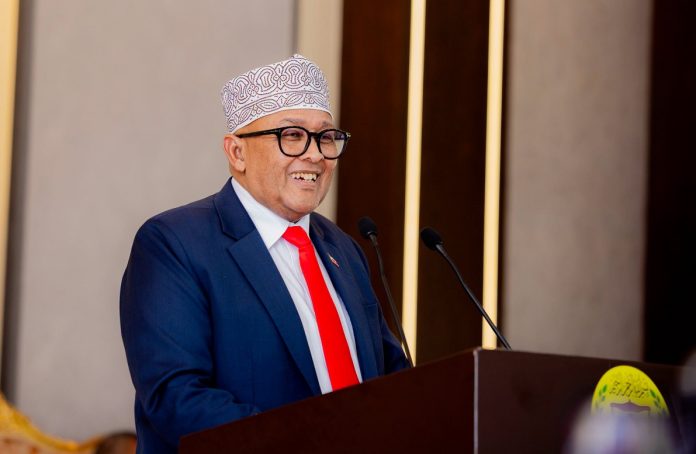
Hargeisa (SLpost)- Somaliland President Abdirahman Mohamed Abdullahi, widely known as Irro, has reaffirmed his government’s confidence in neighbouring Ethiopia and warned against foreign interference in Somaliland’s internal affairs, amid growing tensions over an Egypt-led regional alliance that has explicitly rejected international recognition of Somaliland.
Speaking on Thursday, October 15, after returning from a trip lasting more than a month to the United States and the United Arab Emirates, Irro criticised the alliance formed by Egypt, Somalia, Eritrea and Sudan, arguing that regional cooperation could not succeed while excluding Somaliland.
“Ethiopia is a neighbouring country in whose cooperation and partnership we have great confidence,” the president said, according to remarks delivered upon his return.
He added that Somaliland strongly opposed interference or actions that could threaten Ethiopia’s stability and national sovereignty, while warning countries against attempts to undermine Somaliland’s own security and political independence.
The remarks underline Hargeisa’s effort to preserve its strategic relationship with Addis Ababa at a time when regional rivalries are increasingly intersecting with Somaliland’s campaign for international recognition.
Egypt-led alliance explicitly rejects Somaliland recognition
President Irro’s remarks follow the October 4 quadrilateral summit in New Alamein, Egypt, attended by Egyptian President Abdel Fattah el-Sisi, Somali President Hassan Sheikh Mohamud, Eritrean President Isaias Afwerki and Sudanese leader Abdel Fattah al-Burhan.
The summit produced a joint declaration reaffirming support for Somalia’s unity and territorial integrity and explicitly rejecting any recognition of, or support for, Somaliland.
The position represents a coordinated diplomatic challenge to Somaliland’s longstanding efforts to secure international recognition as an independent state.
For Somaliland, the declaration’s significance extends beyond its formal rejection of recognition. It signals an effort by four strategically positioned countries to coordinate their positions on sovereignty, regional security and the future political order in the Horn of Africa and the Red Sea.
Why Ethiopia matters to Somaliland
The president’s public reaffirmation of confidence in Ethiopia carries particular strategic significance because of the country’s economic weight, geographic position and longstanding interest in securing reliable access to maritime trade routes.
As a landlocked country, Ethiopia relies on neighbouring states and regional transport corridors to move much of its international trade. Somaliland’s Berbera port and the Berbera Corridor offer an alternative commercial route that could deepen economic ties between Hargeisa and Addis Ababa.
The relationship also has a political dimension. Stronger economic interdependence could increase Somaliland’s strategic relevance to Ethiopia, while giving Hargeisa an important regional partner as it pursues wider diplomatic engagement.
Irro’s comments appear designed to reaffirm that Somaliland views Ethiopia as a partner in regional stability rather than as a threat, while warning against attempts by other countries to shape the region’s political arrangements at Somaliland’s expense.
His remarks also suggest that Hargeisa wants to prevent its relationship with Addis Ababa from being weakened by the widening divisions among countries around the Red Sea.
A wider regional rivalry involving Egypt and Ethiopia
The emerging alliance cannot be understood solely through the Somaliland recognition dispute. It is also developing against the backdrop of longstanding strategic disagreements involving Egypt and Ethiopia.
Egypt and Ethiopia have been locked in a dispute over the Grand Ethiopian Renaissance Dam (GERD), which Addis Ababa considers central to its development and electricity generation plans. Egypt and Sudan, both downstream Nile states, have raised concerns about the dam’s impact on water security.
The October 4 declaration reiterated the importance of international law governing transboundary rivers, including the Nile, and rejected unilateral measures that could harm existing water uses in Egypt and Sudan. It also stated that governance of the Red Sea is the exclusive responsibility of littoral states.
That maritime position is particularly relevant to Ethiopia, whose government has repeatedly stressed the strategic importance of securing access to the sea.
The National newspaper reported on October 5 that the declaration’s language on Red Sea governance was relevant to Ethiopia’s efforts to secure a lasting maritime foothold. Al Jazeera also placed the summit within a period of escalating conflict and political tensions across the Horn of Africa.
These overlapping disputes create a regional environment in which Somaliland’s recognition campaign, Ethiopia’s maritime ambitions and Egypt’s security interests increasingly intersect.
Somaliland warns against exclusion from regional cooperation
President Irro’s criticism was unequivocal: Somaliland must be included in regional political and economic decision-making, and no framework for regional cooperation can be sustainable if it excludes Somaliland from decisions affecting its sovereignty, security and strategic interests.
“Somaliland strongly opposes the actions taken by the recently formed alliance of countries led by Egypt, which undermine its sovereignty and statehood,” he said and added that regional cooperation excluding Somaliland could not be sustainable.
“We reiterate that no regional cooperation framework can be sustainable if Somaliland is excluded from decisions affecting the region.”
The president also warned that any country attempting to interfere in Somaliland’s internal affairs, security or stability would receive an appropriate response. At the same time, he reaffirmed that Somaliland’s foreign policy was based on peaceful relations and good neighbourliness.
The statement reflects Hargeisa’s argument that Somaliland should be treated as a regional stakeholder in its own right, rather than as an issue to be decided exclusively through negotiations between Somalia and its international partners.
It also places pressure on the alliance to explain how its commitment to regional stability and cooperation can accommodate Somaliland’s separate political institutions and longstanding demand for recognition.