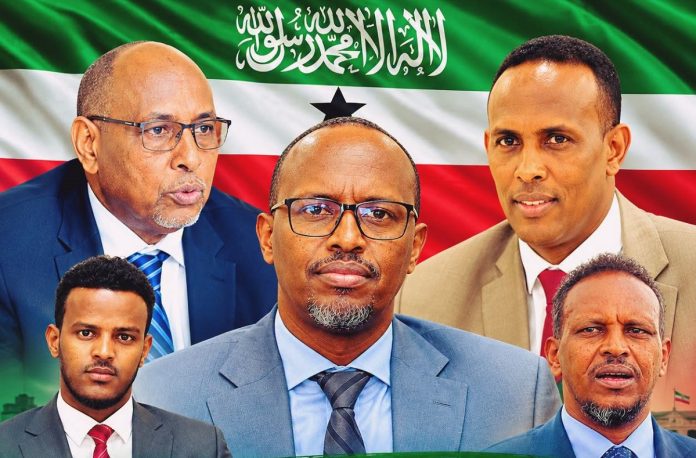
HARGEISA (SLpost)- The Waddani, Kulmiye and KAAH political parties have jointly warned against the use of government power to suppress the media or undermine citizens’ constitutional right to freedom of expression.
The joint statement, issued on Sunday, was signed by three senior political figures: MP Essa Keyd Mahmoud of the ruling Waddani Party, MP Mohamed Hussein Jama (Rambo) of the Kulmiye Party, and KAAH Party leader Abdirahman Mohamed H. Ali.
The statement focused on the detention of poet Ismail Jiheeye and journalist Abdiqani Hussein Abokor, widely known as Baylood, who have reportedly been held at Hargeisa Central Prison for more than two weeks.
The two cases followed an interview conducted by journalist Baylood with Jiheeye, during which the poet publicly raised a grievance and accused Somaliland President Abdirahman Mohamed Abdullahi (Irro) of forcibly taking land he claimed to own near the presidential residence in Hargeisa.
The three officials said Jiheeye had the right to publicly express his grievances, while Baylood was carrying out his journalistic responsibility by reporting the concerns and views of a citizen.
They specifically warned against the use of state authority to silence citizens who raise complaints and journalists who report on those concerns. They stressed that if the dispute involves land ownership or another civil matter, legally established institutions and courts should be responsible for resolving it.
“We are particularly concerned that government power appears to be being used to silence complaining citizens and the media reporting their grievances,” the statement said.
The officials called on the authorities to bring the two men before a competent court if there are clear criminal charges against them and to ensure that due process is followed. If there is no lawful basis for their detention, they said, the two should be released.
They further urged the government to protect freedom of expression and the independence of the press, emphasizing that disputes and grievances raised by citizens should be addressed through the law, courts and constitutional institutions rather than through the use of security forces and detention.
“Somaliland has long prided itself on democracy, freedom of expression and an independent press. We cannot accept that what we have built over thirty years should be undermined by the detention of a poet, journalist or citizen simply because their views are considered unacceptable to the government,” the officials said.
They also reminded President Irro and his administration that government authority is a public trust and should not be used against individuals who criticize officials, raise complaints or ask difficult questions.
“The power of the state is a trust entrusted to it by the people; it is not a power to be used against anyone who criticizes, complains or asks difficult questions of public officials,” they said.
The statement concluded by emphasizing that freedom of expression is not a privilege granted by the government, but a constitutional right guaranteed to citizens of Somaliland.